
Viral or Bacterial Infection? How Doctors Identify the Difference
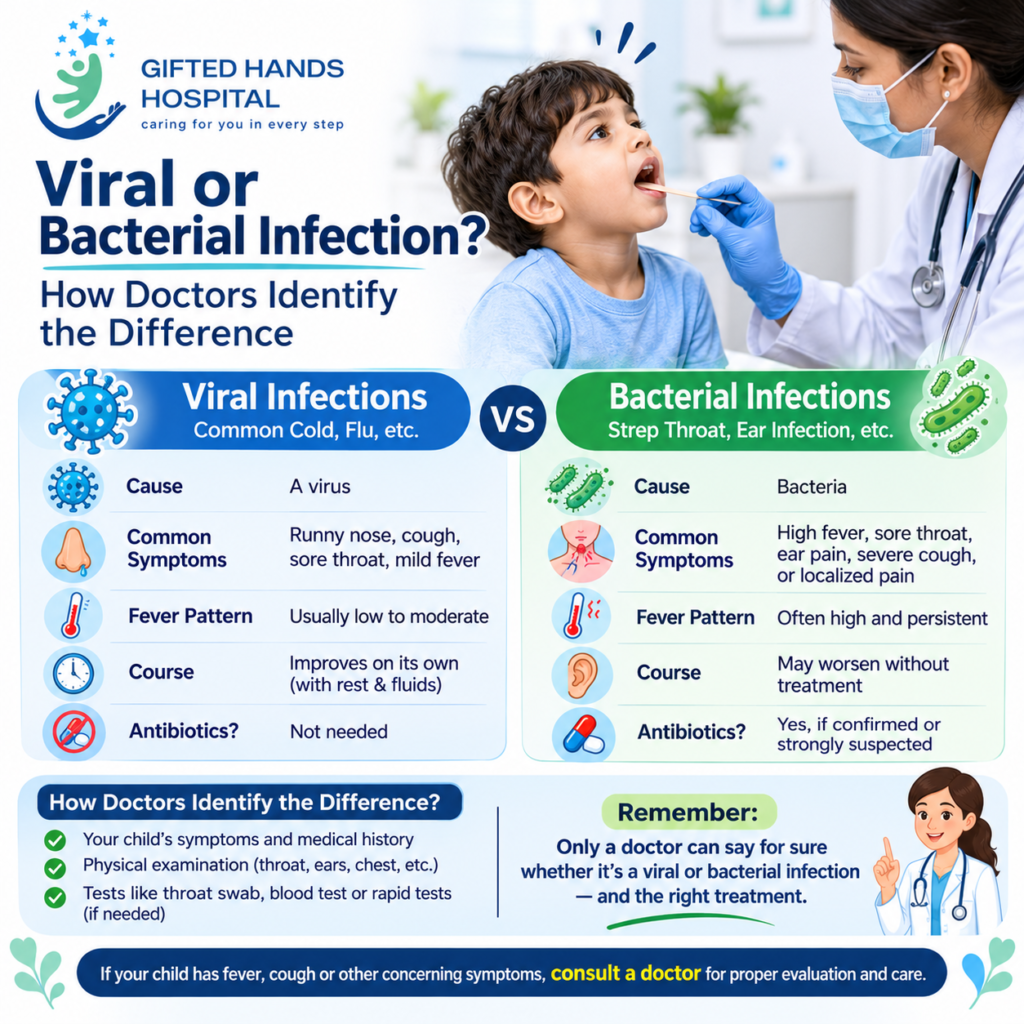
When a sudden fever, sore throat, cough, or stomach upset strikes, almost every patient asks the same practical question: “Is this a viral or bacterial infection, and do I need antibiotics?” While both types of microbes trigger overlapping discomforts—such as fatigue, body aches, and elevated temperature their underlying biology, progression, and medical treatments are fundamentally different.
Knowing how clinicians distinguish between the two protects you from unnecessary antibiotic side effects and prevents dangerous delays when a serious bacterial illness requires targeted therapy. At Gifted Hands Hospital, located on Hennur Banasawadi Road in HRBR Layout 1st Block, our general medicine and internal medicine department combines thorough clinical evaluation with rapid, precision diagnostics to identify the exact cause of infections for families across Kalyan Nagar, HRBR Layout, Hennur, Banaswadi, and Kammanahalli.
The Core Biological Difference: Viruses vs. Bacteria
Although both viruses and bacteria are microscopic pathogens capable of causing illness, they behave very differently inside the human body:
- Bacteria are single-celled, self-sufficient living microorganisms. Most bacteria in and on our bodies are harmless or beneficial (such as gut flora aiding digestion). However, pathogenic bacteria like Streptococcus, Salmonella, or E. coli multiply independently, release toxins, and cause localized tissue inflammation. Antibiotics are specifically engineered to kill bacteria or halt their cell-wall replication.
- Viruses are far smaller than bacteria and are not complete living cells. They consist of genetic material (DNA or RNA) wrapped in a protein coat and cannot survive or multiply on their own. Instead, a virus hijacks healthy human cells, reprogramming them to produce thousands of viral copies. Because viruses lack bacterial cell walls and metabolic machinery, antibiotics have zero effect on viral infections.
How Doctors Differentiate Viral vs. Bacterial Infections Clinically
Because early symptoms often look identical on day one, experienced physicians rely on a structured, four-step clinical framework rather than guesswork.
1. Symptom Onset, Pattern & Localization
Doctors pay close attention to how your symptoms began and whether they affect your entire body or a single anatomical site:
- Viral Infections (Widespread / Systemic): Typically begin abruptly with generalized symptoms across multiple systems runny nose, watery eyes, scratchy throat, dry cough, diffuse body aches, headache, and mild-to-moderate fever. Common culprits include influenza, rhinovirus (common cold), COVID-19, dengue, and viral gastroenteritis.
- Bacterial Infections (Localized / Focal): Often concentrate intensely in one specific organ or tissue such as severe pain on one side of the throat with white pus patches (strep throat), sharp pain in one ear, localized chest pain with productive rust-colored phlegm (bacterial pneumonia), or burning pain during urination (bacterial UTI).
2. Illness Timeline & “Double-Sickening” Curve
Tracking how an illness evolves over 72 to 96 hours provides one of the strongest clinical clues:
- Typical Viral Trajectory: Symptoms peak around days 2 to 3 and steadily improve by days 5 to 7 with rest, hydration, and symptomatic care.
- Secondary Bacterial Superinfection (“Double-Sickening”): Sometimes a viral cold or flu damages the protective mucosal lining of the airways or sinuses, allowing opportunistic bacteria to move in. If you start feeling better around day 4 or 5, only to suddenly develop a high fever spike, worsening facial pressure, or thick cough, doctors suspect a secondary bacterial infection.
3. Physical Examination Findings
During an outpatient consultation, subtle physical signs help guide clinical judgment:
- Throat & Lymph Nodes: Red, inflamed throat accompanied by nasal congestion and hoarseness points toward a virus; beefy-red tonsils with white exudates, tiny red spots on the roof of the mouth, and tender front-neck lymph nodes without a cough suggest bacterial strep pharyngitis.
- Chest Auscultation: Scattered wheezes across both lungs often indicate viral bronchitis, whereas localized crackling sounds (rales) confined to one lung lobe warrant evaluation by our pulmonology and respiratory care team for bacterial pneumonia.
- Abdominal Tenderness: Diffuse cramping with watery diarrhea usually indicates a viral stomach flu, while localized tenderness with high fever and bloody or mucoid stools points toward bacterial dysentery or enteric fever, evaluated via our gastroenterology and hepatology services.
Side-by-Side Comparison: Viral vs. Bacterial Infections
| Clinical Feature | Viral Infection | Bacterial Infection |
| Symptom Spread | Generalized (body aches, runny nose, fatigue) | Localized (ear pain, sinus pressure, burning urine) |
| Typical Duration | Peaks days 2–3; resolves within 5–7 days | Persists or worsens beyond 5–7 days without treatment |
| Fever Pattern | Mild to high early on; trends downward steadily | High, persistent, or spikes after initial improvement |
| White Blood Cell (WBC) | Normal or low (lymphocytes may be relatively higher) | Elevated total WBC with high neutrophil count |
| CRP & Procalcitonin | Normal or mildly elevated | Significantly elevated (especially Procalcitonin) |
| Primary Treatment | Rest, hydration, fever reducers, specific antivirals | Targeted prescription antibiotics + supportive care |
Diagnostic Blood Tests & Biomarkers Doctors Use
When clinical symptoms fall into a grey area or when a fever persists beyond three to four days doctors order targeted laboratory investigations at Gifted Hands Hospital’s advanced diagnostic laboratory and pathology center to confirm the diagnosis objectively:
1. Complete Blood Count (CBC) with Differential
A CBC examines different subsets of white blood cells (WBCs), which act as your immune system’s frontline responders:
- Neutrophilia (High Neutrophils & High Total WBC): Strongly indicates an acute bacterial infection, as neutrophils rush to engulf and destroy bacteria.
- Lymphocytosis or Leukopenia (Normal/Low WBC): Frequently seen in viral infections such as influenza, dengue, and viral respiratory illnesses.
2. Inflammatory Biomarkers: CRP & Procalcitonin
- C-Reactive Protein (CRP): Produced by the liver in response to inflammation. While viral infections can cause mild CRP bumps, markedly elevated CRP levels strongly favor bacterial infection or tissue inflammation.
- Serum Procalcitonin (PCT): One of the most specific biomarkers available today. Procalcitonin levels rise sharply during systemic bacterial infections and sepsis, while remaining low during viral illnesses helping doctors decide confidently whether antibiotics are warranted.
3. Rapid Antigen & Molecular (PCR) Tests
Swab and blood antigen tests provide rapid answers within hours for specific pathogens including Rapid Strep Throat tests, Influenza A/B swabs, COVID-19 RT-PCR, Dengue NS1 Antigen, and Malaria Rapid Diagnostic Tests.
4. Microbiological Cultures & Sensitivity Testing
For urinary tract infections, persistent high fevers, or infected wounds, doctors collect urine, blood, sputum, or throat swab samples before starting antibiotics. Laboratory technicians incubate the sample to grow the exact bacterial strain and test which specific antibiotic eliminates it most effectively.
Common Myths About Viral & Bacterial Infections
Misconceptions often lead patients to request or self-administer antibiotics when they are completely ineffective:
- Myth 1: “Green or yellow nasal mucus always means a bacterial infection.”Fact: During a normal viral cold, clear mucus naturally turns thick, yellow, or green around days 3 to 5 as white blood cells rush into the nasal passages to clear viral debris. Color alone does not mean you need antibiotics unless symptoms last beyond 10 days or worsen sharply after initial improvement.
- Myth 2: “A high fever automatically proves the infection is bacterial.”Fact: Viral illnesses like influenza, dengue, and adenovirus regularly trigger temperatures above. Fever height reflects immune activity, not whether the germ is a virus or bacterium.
- Myth 3: “Taking antibiotics early prevents a viral cold from turning serious.”Fact: Prophylactic antibiotics do not prevent viral progression. Instead, they wipe out beneficial gut bacteria, cause diarrhea or allergic reactions, and drive antimicrobial resistance.
Why Taking Antibiotics for a Viral Infection Is Harmful
Using leftover antibiotics without a doctor’s prescription carries real personal and public health risks:
- Microbiome Disruption: Antibiotics kill protective gut and mucosal bacteria, leading to antibiotic-associated diarrhea, yeast infections, and weakened digestive immunity.
- Masking True Diagnoses: Taking unprescribed antibiotics before medical testing can partially suppress bacterial growth in blood or urine cultures, making accurate diagnosis much harder.
- Antibiotic Resistance: Surviving bacteria adapt and mutate, rendering standard oral antibiotics ineffective when you genuinely need them for pneumonia, kidney infections, or surgical recovery.
When Should You See a Doctor Immediately?
Most mild viral infections improve safely at home with hydration, balanced nutrition, and paracetamol for comfort. However, you should consult an internal medicine specialist at Gifted Hands Hospital promptly if you notice any of these warning signs:
- Fever lasting more than 3 to 4 days or returning after a brief fever-free break.
- Temperature exceeding that does not respond to standard fever medication.
- Shortness of breath, wheezing, or sharp chest pain when breathing or coughing.
- Severe sore throat with difficulty swallowing, drooling, or swollen neck glands.
- Burning urination, lower back/flank pain, or cloudy urine requiring prompt urology and urinary tract care.
- Severe headache, stiff neck, confusion, or unusual drowsiness.
- Persistent vomiting or inability to keep fluids down.
- High-Risk Health Profile: Infants, adults over 65, pregnant women, diabetics, and individuals with heart, lung, or kidney conditions should seek medical evaluation early.
Frequently Asked Questions (FAQs)
1. Can you have a viral and bacterial infection at the same time?
Yes. A common scenario is a secondary bacterial infection, where an initial viral illness (such as influenza or a severe cold) weakens airway defenses, allowing bacteria to cause secondary sinusitis, ear infection, or pneumonia.
2. How long does a viral fever normally last in adults?
Most uncomplicated viral fevers last between 3 to 5 days, though mild post-viral fatigue or a lingering dry cough can persist for one to two weeks while tissues heal.
3. Which blood test best tells the difference between viral and bacterial infection?
Doctors typically combine a Complete Blood Count (CBC) with C-Reactive Protein (CRP) and Serum Procalcitonin (PCT). Elevated neutrophils alongside high CRP and Procalcitonin strongly indicate a bacterial infection.
4. Should I stop taking prescribed antibiotics once my fever goes away?
No. Always complete the full antibiotic course prescribed by your doctor, even if you feel completely better after two days. Stopping early allows the toughest bacteria to survive and cause a relapse.
5. Where can I get fast diagnostic testing for fever in Kalyan Nagar and HRBR Layout, Bangalore?
You can visit Gifted Hands Hospital on Hennur Banasawadi Road (HRBR Layout 1st Block, Kalyan Nagar), where internal medicine consultations, rapid antigen panels, CBC/CRP/Procalcitonin blood tests, and imaging services are available under one roof.
Get Accurate Diagnosis & Care at Gifted Hands Hospital
Do not guess when it comes to persistent fever or lingering infection symptoms. Our experienced physicians at Gifted Hands Hospital provide thorough clinical evaluations and rapid laboratory diagnostics to determine whether your illness is viral or bacterial ensuring you receive the exact treatment you need without unnecessary medications. Book an appointment online or visit our outpatient department in HRBR Layout / Kalyan Nagar today.

