
What Is Recurrent Fever? Causes, Symptoms, Tests & When to See a Doctor
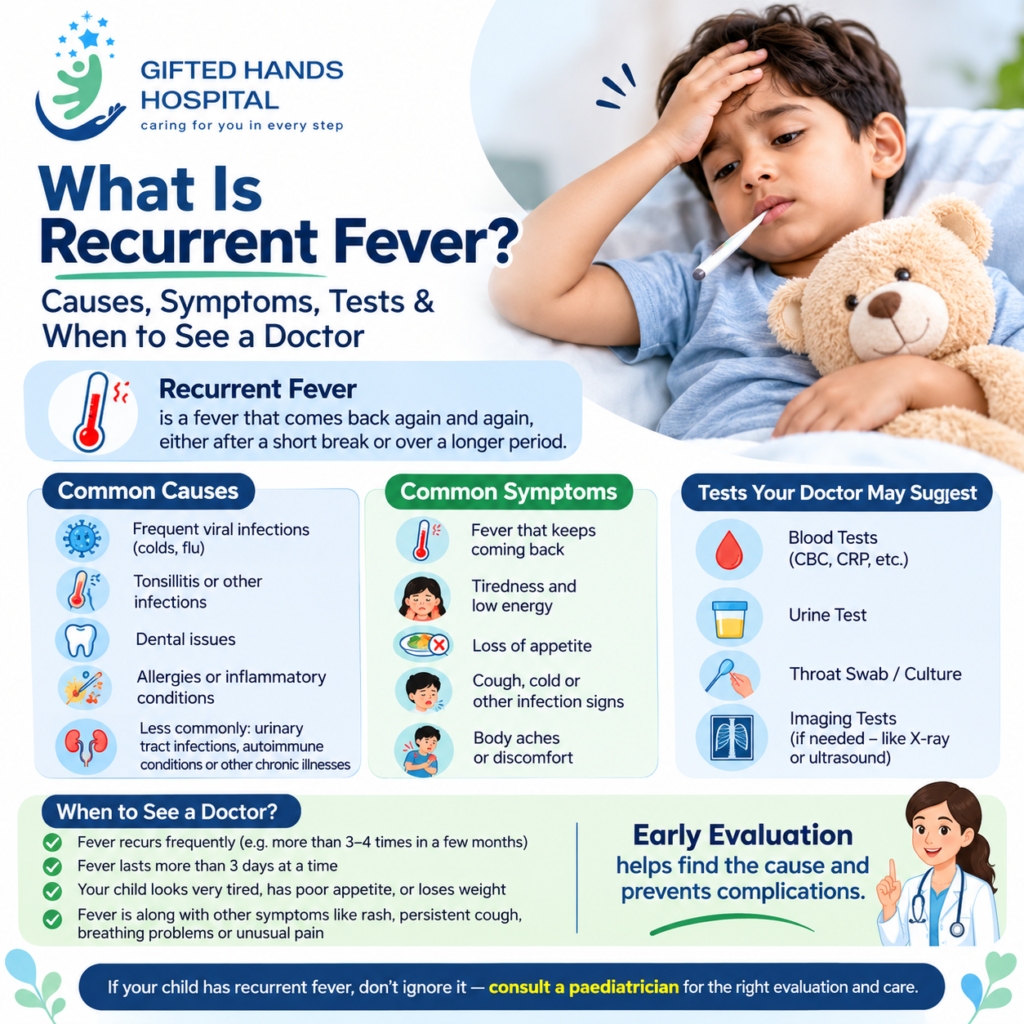
Most everyday viral fevers run a predictable, short course, peaking for two or three days before fading away with rest, fluids, and basic fever-reducing medication. However, when you experience a fever that comes and goes, dropping temporarily after a dose of paracetamol only to return every evening, or disappearing for a few days before flaring up again, your body is signalling an unresolved medical condition that needs structured evaluation.
Addressing recurrent fever in adults in Kalyan Nagar requires moving beyond guesswork and over-the-counter symptom relief. At Gifted Hands Hospital, located conveniently on Hennur Banasawadi Road in HRBR Layout 1st Block, our internal medicine specialists provide comprehensive diagnostic workups and targeted unexplained fever treatment in Kalyan Nagar, serving patients across HRBR Layout, Hennur, Banaswadi, and Kammanahalli.
What Is Recurrent Fever? Clinical Definition & Fever Patterns
Medically, a normal adult body temperature hovers around 98.6∘F (37∘C), with natural fluctuations of up to 1∘F between early morning and late evening. A fever is clinically defined as an oral temperature of 100.4∘F (38∘C) or higher.
Recurrent fever refers to repeated episodes of elevated body temperature separated by intervals of normal temperature, or a fever that persistently rebounds despite basic home treatment. When patients visit our clinic saying their fever keeps coming back in HRBR Layout or Kalyan Nagar, doctors first map the fever’s daily rhythm to narrow down potential triggers:
- Intermittent Fever: Temperature spikes sharply most often in the late afternoon or night and drops completely back to normal within a 24-hour cycle. Common in localized bacterial infections, tuberculosis, and certain parasitic illnesses.
- Remittent Fever: Body temperature fluctuates throughout the day by more than 2∘F (1∘C), never quite returning to a normal baseline. Frequently observed in typhoid fever, severe respiratory infections, and infective endocarditis.
- Relapsing (Periodic) Fever: Distinct febrile episodes lasting several days, separated by completely fever-free periods lasting days or weeks. Malaria, viral reactivations, and autoimmune periodic fever syndromes follow this pattern.
- Fever of Unknown Origin (FUO): A documented temperature above 101∘F (38.3∘C) lasting three weeks or longer without a clear diagnosis after initial outpatient tests. Managing persistent fever in adults in Kalyan Nagar of this nature requires systematic specialist evaluation.
Top Recurrent Fever Causes in Hennur, Kalyan Nagar & North Bengaluru
Urban living in Bengaluru presents a distinct mix of tropical vector-borne infections, food and waterborne illnesses, hidden organ infections, and non-infectious inflammatory conditions. When evaluating recurrent fever causes in Hennur and surrounding neighborhoods, physicians systematically investigate five core clinical categories:
1. Vector-Borne & Seasonal Infections
Bengaluru’s shifting weather patterns, monsoon spells, and active urban construction create year-round breeding pockets for disease-carrying mosquitoes and mites.
- Dengue Fever (Biphasic / Saddleback Pattern): Many dengue patients experience high fever for 3–4 days, followed by a brief 24-hour fever-free window that mimics recovery, before a second fever wave hits alongside dropping platelet counts and severe fatigue.
- Malaria (P. vivax and P. falciparum): Produces classic cyclical episodes of intense shivering chills, high fever spikes, and drenching sweats recurring every 48 to 72 hours.
- Scrub Typhus & Rickettsial Infections: Increasingly recognized across Bengaluru’s green belts and residential outskirts, scrub typhus causes prolonged high fever, severe headache, body aches, and occasionally a small dark scab (eschar) at the bite site.
2. Bacterial Infections & Hidden Focal Sepsis
Unlike self-limiting viral illnesses, bacterial infections persist or rebound until the exact causative organism is identified and treated with a complete, targeted antibiotic course.
- Typhoid & Paratyphoid (Enteric Fever): Transmitted via contaminated food or water, typhoid causes a progressive “step-ladder” rise in evening temperature, accompanied by abdominal discomfort, loss of appetite, and coated tongue.
- Silent Urinary Tract Infections (UTIs): Recurrent low-grade fevers with chills sometimes occurring without classic burning urination, particularly in women, older adults, and diabetics often stem from upper urinary tract or kidney inflammation requiring evaluation by our urology and urinary tract care team.
- Tuberculosis (Pulmonary & Extrapulmonary TB): A leading cause of prolonged evening-rise fever in India. Extrapulmonary TB (affecting lymph nodes, abdomen, spine, or chest lining) frequently causes afternoon fever spikes, night sweats, and weight loss without any persistent cough.
- Deep-Seated Abscesses & Sinus/Dental Infections: Hidden liver abscesses, chronic sinusitis, pelvic inflammatory conditions, or untreated dental root infections can intermittently release bacteria into the bloodstream.
3. Viral Reactivations & Post-Viral Thermoregulatory Sensitivity
Viruses such as Epstein-Barr Virus (EBV) and Cytomegalovirus (CMV) remain dormant in the body after initial exposure and can reactivate during periods of high stress, nutritional deficiency, or lowered immunity causing weeks of intermittent fever, swollen neck glands, and exhaustion. Similarly, after severe influenza or COVID-19, the brain’s temperature-regulating center (hypothalamus) may remain temporarily sensitized, producing mild afternoon temperature rises for two to three weeks.
4. Autoimmune & Inflammatory Conditions
When infectious workups repeatedly come back negative, an internal medicine specialist screens for non-infectious inflammatory disorders. Conditions such as Systemic Lupus Erythematosus (SLE), Rheumatoid Arthritis, Adult-Onset Still’s Disease, and Vasculitis cause immune-mediated inflammation that drives recurring fevers alongside joint stiffness, skin rashes, or unexplained fatigue.
5. Medication Reactions & Endocrine Triggers
Certain prescription drugs—including specific antibiotics, anti-seizure medications, and blood pressure drugs—can trigger a hypersensitivity drug fever that resolves only once the medication is discontinued under medical supervision. Subacute thyroiditis (inflammation of the thyroid gland) and hyperthyroidism can also mimic a lingering viral fever with neck tenderness, palpitations, and heat intolerance.
Accompanying Recurring Fever Symptoms You Should Not Ignore
Tracking the symptoms that appear alongside your temperature spikes gives your physician vital diagnostic clues. Common recurring fever symptoms in Kalyan Nagar patients include:
- Evening Chills, Rigors & Drenching Night Sweats: Strongly associated with malaria, tuberculosis, deep bacterial abscesses, or hematological conditions.
- Unexplained Weight Loss & Loss of Appetite: A key indicator of chronic infection (such as TB) or systemic inflammatory disease.
- Swollen Lymph Nodes (Neck, Underarms, or Groin): Points toward viral reactivations (EBV/CMV), localized bacterial drainage, or immunological conditions.
- Joint Aches, Morning Stiffness, or Fleeting Skin Rashes: Suggests chikungunya, dengue, scrub typhus, or autoimmune connective tissue disorders.
- Persistent Dry Cough or Breathlessness: Requires prompt evaluation via our pulmonology and respiratory care specialists.
- Right Upper Abdominal Discomfort or Nausea: May point toward liver inflammation, typhoid, or gallbladder infection evaluated through gastroenterology and hepatology services.
Why Self-Medicating With Antibiotics Delays Recovery
When a fever that comes and goes disrupts work and family routines, many adults take leftover antibiotics for two or three days and stop as soon as their temperature normalizes. Clinically, this habit backfires in three major ways:
- Temporary Masking & Stronger Rebound: Incomplete antibiotic courses reduce bacterial load just enough to temporarily quiet the fever, allowing surviving bacteria to multiply and trigger a more severe relapse days later.
- Sterilized Blood Cultures: Even one or two doses of an unprescribed antibiotic before blood testing can prevent bacteria from growing in laboratory cultures, obscuring the true diagnosis.
- Antibiotic Resistance: Irregular dosing trains common bacteria to resist standard first-line oral medications, necessitating stronger, longer treatments later.
Essential Diagnostic Tests for Recurrent & Persistent Fever
Rather than subjecting patients to random, unfocused test panels, our physicians follow a structured, step-by-step diagnostic protocol at Gifted Hands Hospital’s advanced diagnostic laboratory and pathology center:
Stage 1: Foundational Fever Panel (Days 3 to 5)
- Complete Blood Count (CBC) with Peripheral Smear: Evaluates white blood cell counts (high in bacterial infections, low in dengue/viral fevers), platelet trends, and directly examines red blood cells for malaria parasites.
- Inflammatory Markers (CRP & ESR): C-Reactive Protein and Erythrocyte Sedimentation Rate quantify active systemic inflammation.
- Rapid Vector & Enteric Screening: Dengue NS1 Antigen (days 1–5), Dengue IgM/IgG antibodies (day 5 onwards), Malaria antigen card test, and Typhidot IgM.
- Urine Routine & Microscopy: Identifies silent urinary tract infections.
Stage 2: Microbiological & Organ Function Workup (Days 5 to 10)
- Aerobic Blood & Urine Cultures: Drawn ideally before starting antibiotics to isolate exact bacterial strains and determine targeted antibiotic sensitivity.
- Liver & Kidney Function Tests (LFT & KFT): Assesses hepatic enzyme elevation (common in typhoid, dengue, viral hepatitis, and leptospirosis) and renal function.
- Scrub Typhus & Leptospira Serology: Essential when high fevers persist beyond a week without obvious respiratory or urinary symptoms.
Stage 3: Targeted Imaging & Specialist Panels (Fevers > 10–14 Days)
- Digital Chest X-Ray & High-Resolution CT: Screens for hidden lung infiltrates, atypical pneumonia, or enlarged chest lymph nodes.
- Abdominal & Pelvic Ultrasound: Conducted via our ultrasound and Color Doppler imaging suite to detect silent liver abscesses, gallbladder pathology, or enlarged abdominal lymph nodes.
- Autoimmune, Thyroid & TB Workups: ANA profile, Serum Ferritin, Thyroid Function Tests (TSH, Free T3/T4), and IGRA / Mantoux testing when prolonged fever remains unexplained.
| Diagnostic Test | What It Detects | Recommended Timing |
|---|---|---|
| CBC + Peripheral Smear | WBC shifts, platelet drops & malaria parasites | Day 2–3 of fever |
| Dengue NS1 & IgM/IgG | Early vs. late-stage dengue infection | NS1: Days 1–5 / IgM: Day 5+ |
| Blood Culture & Sensitivity | Bloodstream bacteria & exact antibiotic match | Prior to starting antibiotics |
| CRP & Procalcitonin | Distinguishes bacterial infection from viral inflammation | Day 3–5 onwards |
| Abdominal Ultrasound | Hidden liver abscess, kidney infection, or lymph nodes | Fever lasting > 7 days |
When to See a Doctor: Red-Flag Warning Signs
Consult an internal medicine specialist promptly if your fever lasts beyond 3 to 4 days or returns after a brief break. Seek immediate medical care at Gifted Hands Hospital if your recurring fever is accompanied by any of these warning signs:
- High Fever Above 103∘F103^\circ\text{F}103∘F (39.4∘C39.4^\circ\text{C}39.4∘C) that fails to respond to standard paracetamol dosing.
- Severe Headache, Neck Stiffness, Confusion, or Extreme Drowsiness.
- Persistent Vomiting or inability to keep fluids and oral medications down.
- Chest Pain, Shortness of Breath, or Coughing Up Blood.
- Sudden Skin Rash, Bleeding Gums, Nosebleeds, or Dark Stools (warning signs of dengue hemorrhagic complications).
- Drenching Night Sweats & Noticeable Weight Loss over recent weeks.
- Underlying Vulnerability: Adults over 60, pregnant women, diabetics, heart or kidney patients, and individuals on immunosuppressive therapy should be evaluated within 24–48 hours of fever onset.
Practical Steps to Take While Awaiting Your Evaluation
Until your physician confirms the exact cause of your returning fever, follow these safe, evidence-based measures at home:
- Keep a 6-Hourly Temperature Log: Record exact digital thermometer readings, the time of each spike, and when you took fever medication. This chart helps your doctor spot diagnostic fever patterns immediately.
- Maintain Consistent Hydration: Sip Oral Rehydration Salts (ORS), coconut water, clear soups, and plain water throughout the day to replace fluids lost through sweating.
- Use Paracetamol Only for Fever Relief: Avoid self-medicating with NSAIDs (such as ibuprofen, diclofenac, or mefenamic acid) during early fever episodes in Bengaluru, as they can aggravate bleeding risks if dengue is present.
Why Choose Gifted Hands Hospital for Unexplained Fever Treatment in Kalyan Nagar?
When a fever keeps returning, fragmented clinic visits and delayed lab reports only prolong discomfort. At Gifted Hands Hospital, our general medicine and internal medicine department offers a streamlined, patient-first approach:
- Experienced Internal Medicine Physicians: Skilled in diagnosing complex recurrent fever in adults in Kalyan Nagar without unnecessary polypharmacy.
- Same-Day Integrated Diagnostics: In-house pathology, blood cultures, digital X-ray, and high-resolution ultrasound deliver rapid answers so targeted therapy begins promptly.
- Convenient North & East Bengaluru Access: Located on Hennur Banasawadi Road in HRBR Layout 1st Block easily accessible for families across Kalyan Nagar, HRBR Layout, Hennur, Banaswadi, and Kammanahalli.
Frequently Asked Questions (FAQs)
1. Why does my fever disappear during the day and come back every evening?
Fever-reducing medications like paracetamol wear off after 4 to 6 hours, allowing unresolved infections to trigger a fresh spike. Additionally, the body’s natural cortisol levels dip in the evening, making conditions like typhoid, tuberculosis, and viral illnesses flare up at night.
2. How long should an adult wait before seeing a doctor for a fever that comes and goes?
If an adult fever persists beyond 3 to 4 days, or subsides for a day or two before returning, you should consult a physician for targeted blood tests rather than continuing home remedies.
3. Can dehydration or stress cause a recurrent fever in adults?
Severe dehydration can mildly elevate body temperature, and chronic stress can lower immunity—allowing dormant viruses or mild sinus infections to flare repeatedly but true recurring fevers above 100.4∘F almost always have an underlying infectious, inflammatory, or endocrine cause.
4. What tests are done first when a fever keeps coming back in HRBR Layout or Kalyan Nagar?
Doctors typically begin with a Complete Blood Count (CBC) with malaria smear, CRP, Dengue NS1/IgM, Typhidot, Liver Function Test, and Urine Routine examination, followed by blood cultures or abdominal ultrasound if the fever persists beyond 5–7 days.
5. Where can I consult a specialist for persistent fever in adults in Kalyan Nagar?
You can visit Gifted Hands Hospital on Hennur Banasawadi Road (HRBR Layout 1st Block, Kalyan Nagar), where internal medicine specialists and full diagnostic laboratory services are available under one roof.
Schedule Your Fever Consultation Today
Do not ignore a fever that comes and goes or mask symptoms with repeated self-medication. Get an accurate diagnosis and personalized care plan from experienced internal medicine specialists at Gifted Hands Hospital. Book your consultation online or visit our outpatient department in HRBR Layout / Kalyan Nagar today.

